To her, Bambi will say: Thank you, bravo, and please keep singing and making our world a more beautiful place!
This being said, Bambi is eager to share with you her precious musical discovery!
The first song in French was Ms. Melki’s tribute to Beirut in August 2021 (one year after the surrealistic port explosion). She chose to interpret Mr. Jacques Brel’s “Ne me quitte pas” [Please, do not leave me]. She does not know about you, but Bambi’s heart will always be moved by the powerful text/melody of this eternal song. Thank you, Ms. Leila Milki, for your beautiful interpretation!
The second French song is La Bohème. The late Mr. Aznavour would have been proud to listen to this version of his beautiful song, Bambi is convinced!
The third English song is “Freedom” by Beyoncé. Bravo as well!
And now, if you are homesick for the Christmas season, here is an English carol for you :). What a very nice fourth song!
The fifth song is a great Medley of Fairouz’ Nihna Wel Amar Giran [The moon, our neighbour] and Ms. Edith Piaf’s La vie en Rose. Bravo to the two artists!
Finally, the last song is Fairouz’ Bint el Shalabiaya [a song about a pretty girl]. Bambi hopes you will enjoy it, especially you Alexis if you are reading until now :).
A picture of Ms. Sandra Succar taken from the internet. Congratulations to her!
Bambi would like to begin by thanking her friends Nadim and Hala for sharing the wonderful news. She is also grateful for her sister Roula for sharing the video below on her Twitter account. This being said, bravo to the talented Ms. Sandra Succar, the 23-year-old Lebanese athlete in Mixed Martial Arts (MMM): She offered her country a World Championship. Mabrouk to the Champion of the Land of the Cedars!!!
Below you can listen to Ms. Succar in English (with her moving words about her country that is going through very dark days!). She also shares her winning strategy. Isn’t it refreshing and sweet (like this athlete’s family name) to finally hear joyful news from Lebanon?
Think of it. The athletes of Lebanon are totally on their own: No public support, no gas to drive to their training places, no power to have electricity while training or resting at home, no energy to heat their place (this winter and spring have been very cold), perhaps little or no food in their fridge… and if they have access to all the latter, it is HIGHLY expensive (due to hyperinflation). Yet, they work hard and dream big!
Likely because of all the above, Bambi had tears in her eyes when she listened to the Lebanese National Anthem (segment on the radio). Bravo and thanks again Ms. Sandra Succar!
To conclude this post, Bambi will offer “our” Champion two songs: (1) The National anthem of her country– kids’ style, subtitled in English and (2). Mr. Ramy Ayach’s Mabrouk [Congrats] song :)!
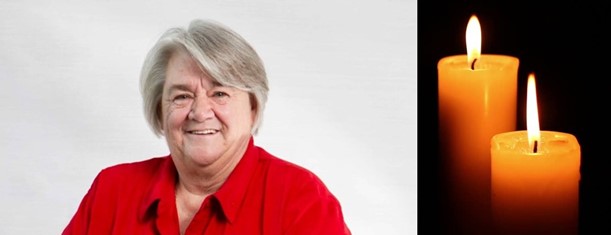
She sends her condolences first to Ms. Claudette Bradshaw’s family as well as to her close friends, former colleagues, former staff, Canada’s scientific community, healthcare providers, and families affected by or supporting individuals with the Fetal Alcohol Spectrum Disorder (FASD). What a loss for Canada and for us in NB in particular… What an impressive chapter that is turned!
Indeed, Ms Bradshaw has been a high-calibre Liberal federal politician for many years. She was the Minister of Labour, Minister responsible for the Francophonie, Minister of State and also Minister responsible for homelessness (https://www.ourcommons.ca/Members/en/claudette-bradshaw(134)/roles).
She was competent, authentic, and devoted (i.e., people-oriented, principled, etc.). With all due respect to all the good politicians of the entire world, the honourable Claudette Bradshaw was something else. Thanks to her for all what she has done for her country and people.Thank goodness her legacy will stay with us. Her memory, both political and human, will surely be eternal.
Indeed, Ms. Claudette Bradshaw has inspired MANY Canadians, including Bambi. Among her significant contributions, we are all grateful for her incredible championship for Fetal Alcohol Syndrome, across the country, and particularly here in her native New Brunswick.
There is a reason why there is an award in her name by the prestigious CanFASD or “The Canada Fetal Alcohol Spectrum Disorder Research Network (CanFASD)”, which is a “collaborative, interdisciplinary research network, with collaborators, researchers and partners across the nation. It is Canada’s first comprehensive national Fetal Alcohol Spectrum Disorder (FASD) research network. It started as an alliance of seven jurisdictions and operated for seven years as the Canada Northwest FASD Research Network.”
In honouring Ms. Bradshaw, if she may, Bambi would like to publicly “re-tell” her what she had the chance to express to her privately here in Sackville at one of the editions of the Mount A Breakfast Chats she used to annually organize in the community and moderate: She is a fan and she was grateful to how she (and her spouse) kindly immediately accepted Bambi’s invitation to the event. They drove to Sackville on an early Saturday morning in slightly challenging weather. Ms. Bradshaw was a great listener at that event. Toward the end, she also actively participated, enriching the discussion among the 50+ community members and and the talented speakers (experts in the FASD field).
Of note, participants of this event may likely remember, like Bambi, a comment made by Ms. Bradshaw. Her words have impressed at least two participants from the nearby Nova Scotia. They contacted Bambi after the event to express their sentiment. In their mind and in Bambi’s, it is rare in life to hear some professionals (e.g., dentists) praising the work of another colleague (who worked on the teeth of their patients before them). In the same way, it is often very rare, and thus refreshing, to hear a politician speaking highly of their political opponents. This is what Ms. Claudette Bradshaw elegantly and honestly did: In one of her comments, she mentioned in a positive way the budget surplus her Ministry (of Labour, if Bambi recalls well) inherited from the former government (i.e., of Mr. Stephen Harper).
To honour you/your memory Ms. Claudette Bradshaw, if she may, Bambi would like to offer you the Time to Say Goodbye ‘s song by Mr. Andrea Bocelli and Ms. Sarah Brightman.
May your memory be eternal. May your family members find peace in their hearts with every passing hour, day, week, month, year. As for us Canadians, may we have the chance to elect politicians of the calibre and decency of the honourable Claudette Bradshaw…
Bambi’s heart now goes to the family and friends of Ms. Rita Antoun Hardini. The latter was was just over 18 year old when she was seriously injured in the surrealistic Beirut port explosion of August 4, 2020.
It is hard to imagine just half of single drop of the ocean of sorrow of Ms. Hardini’s parents who will be burying their daughter today. Of note, she has lived the last 19 months of her short life on life support… just like her bankrupt country.
In Ici Beyrouth, we can read the powerful words of Ms. Marianne Fadoulian, the sister of Gaya, another blast victim (https://icibeyrouth.com/societe/53545). According to Ms. Fadoulian, the Lebanese political power “continues to turn a deaf ear, ignoring the claims of those close to the victims… The officials are trying to find a thousand legal and political formulas to prevent the investigation from continuing and the judgment of the culprits“.
To conclude this sad post, Bambi would like to pay tribute to Ms. Rita Antoun Hardini with the beautiful music of a moving, great German musician she discovered yesterday (and she will follow from now on, http://silvio-schneider.de/). His guitar piece, composed in 2015, is entitled “Beyrouth“…
May your memory be eternal Rita (or Ms. Rita Antoun Hardini). May God know how to comfort your family. May justice (and love) finally prevail in Beirut…
A picture taken from An Nahar. Rest in peace Ms. Julia Awdeh… Will just ever know how to prevail in Beirut?
Ms. Julia Awdeh is most likely the 219th victim of the Beirut port explosion. The latter woke up from her coma one month following the surrealistic human-made and still unpunished tragedy. However, tragically, she died today after one year and seven months since that doomed August 4, 2020. Bambi’s heart goes to her son, Samuel, and to the rest of her family, friends, and by extension the entire Lebanon.
Anyhow, this post is meant to honour Ms. Julia Awdeh’s memory. If she may, Bambi would like to offer her son and loved ones two songs. The first is a beautiful French-Canadian one, entitled Tu trouveras la paix [You will find peace in your heart] interpreted by the talented Ms. Mélissa Bédard. The second song about the Beirut explosion, by Mr. Ghassan Saliba, is entitled Maakouly shi nhar? [Is it possible one day?]. Bambi has translated the lyrics of this song into English in an earlier post shown further below.
As for the Lebanese political dinosaurs (some are still in power for over 40 years!), Bambi has no word and no song for them. Nothing. May God forgive them for having destroyed their country and killed their own people (and many residents or guests originally from other countries), whether voluntarily or by negligence.
Once again, may your memory be eternal Ms. Julia Awdeh…
Some people are almost always late. Others tend to always arrive early.
In life, sometimes we tell ourselves or others “it is too late“. Yet, at other times, we tell others or convince ourselves that it is “better late than never“.
Some of us will always tend to procrastinate, at any stage of life. Yet others will become increasingly efficient in order not to perceive a waste of time, especially as they advance in age.
We may learn to value time more after life losses or when extra years feel like a gift of life.
We perceive time as being shorter when we spend it with loved ones. In contrast, we may be bored to death if we are with dull people or situations.
We fill our mind with free thoughts and meaningful daily activities when we are or feel like in a prison.
We use time so efficiently in science and technology.
Some may sometimes feel like prisoners (of time or despite the time). Others may become like non-creative products of their historical times.
Sometimes we have the time or we give time to time.
We can also take the time (to listen, to get to know, and to love even).
At times, we may feel as if time is being stolen from us.
Yes, there may be an optimal time, good times, or clearly bad times.
Isn’t it for a wise reason that they say that there is a time for every season?
Indeed, there is a time to love with passion, time to appreciate life and its tender moments with loved ones, time to swear to vent, time for oneself, and time to give from ourselves to our loved ones without any consideration for time.
In the end, there is a time to end a story, turn a life chapter, involving others or us as the main characters. There could be times for new chapters… or it can be the last page of the last one.
There is surely time, if we wish, to fully live (a moment or a lifetime).
Time to grow and keep re-growing, to learn, and time to play (on its own or combined to all the other aspects of life).
Time to rest too, whether through a nap or the final big rest, time to mourn… and to grow… and again keep growing.
To conclude this post on time and the perceived time, here are a few songs highlighting this post’s topic. Bambi hopes you will enjoy them. The last one is strictly in French, but an English translation follows for your convenience.
Have a beautiful Friday/weekend. Remember to enjoy your time :)!
Some love songs like The windmills of my heart, when translated into Arabic, become endless (“no beginning and no end”), as per Ms. Hiba Tawaji’s famous Lebanese songentitled La bidayi wala nihayi:
Bambi just came across this cartoon by YGreck, published in the Journal de Québec yesterday, when we learned that a deal between Mr. Singh’s New Democratic Party (NDP) will keep Mr. Trudeau’s Liberals in power until 2025. Yes for that long by providing the Liberals with a majority until then.
The cartoon below show us the love that seems to be uniting the couple Trudeau-Singh. You can see how the Bloc Québécois and the Conservatives are taking a big hit (the two politicians to the right of the picture). We can also see all the money flying in the air: More spending since public money grows not just on trees, but also on wedding cakes too.
Anyhow, this is an interesting cartoon, regardless of our political opinion: whether we are happy for this couple (and us all by extension), worried about the country’s present and future, totally indifferent, convinced that Canada has the best Prime Minister ever, and/or the NDP is shining as an independent political party. Yes, it is healthy to laugh in life… or just to smile, if the heart is not completely there.
As for Bambi, if she may, she would like to offer Mr. Trudeau and Mr. Singh a song by Fairouz. Her way of saying Mabrouk :). It is entitled: “I love you in the winter, I love you in the summer” (sub-tittled in English). May their apparent political harmonious love be contagious. Nevertheless, thank Goodness, unhappy marriages end in life (one day or another). Yes, luckily, human relationships are breakable. We can get into them, but we can also walk out of them… if/as needed in life.
To conclude this brief post, following the DW News brief documentary, Bambi will dedicate Fairuz’ song “I love you Lebanon” to the Lebanese people. May God help them keep their sanity while coping with all the adversity and uncertainty they have been facing since October 17, 2019. Eventually (soon?!), this tiny country will hit the rock bottom of its misery, finally begin its recovery journey, and rise again!
It is perhaps in our collectively insane times of extreme political correctness that we appreciate even more every refreshing (learning) opportunity of an academic chat among scholars.
Bearing the above in mind, Bambi felt honoured, happy, and even touched when the accomplished Dr. Frances Widdowson, Associate Professor of Economics, Justice, and Policy Studies, invited her to her excellent show cleverly entitled “Rational Space Disputations“.
Before sharing the interview below, Bambi searched the net and came across a website with public information about Dr. Widdowson’s own surreal story of censorship: https://wokeacademy.info/episodes/. What a deeply sad and shocking story out of our Canadian universities about intolerance of different opinions in academia and, by extension, in today’ society…
Anyhow, thank you again, Frances (or Dr. Widdowson), for having Bambi. What an enriching (and fun) discussion with a unique formula: First hour, you interview your guest. Second hour, your guest interviews you.
To conclude this post, Bambi/Rima will forever be grateful for your kindness Frances and for the support of the Society for Academic Freedom and Scholarship (SAFS) back in February 22, 2021 (a big thank you to Dr. Mark Mercer, SAFS President and to all the Board members, including yourself). Last but surely not least, and from the bottom of her heart, Bambi wishes you all the best in your own arbitration!